Policy · 27 July 2026
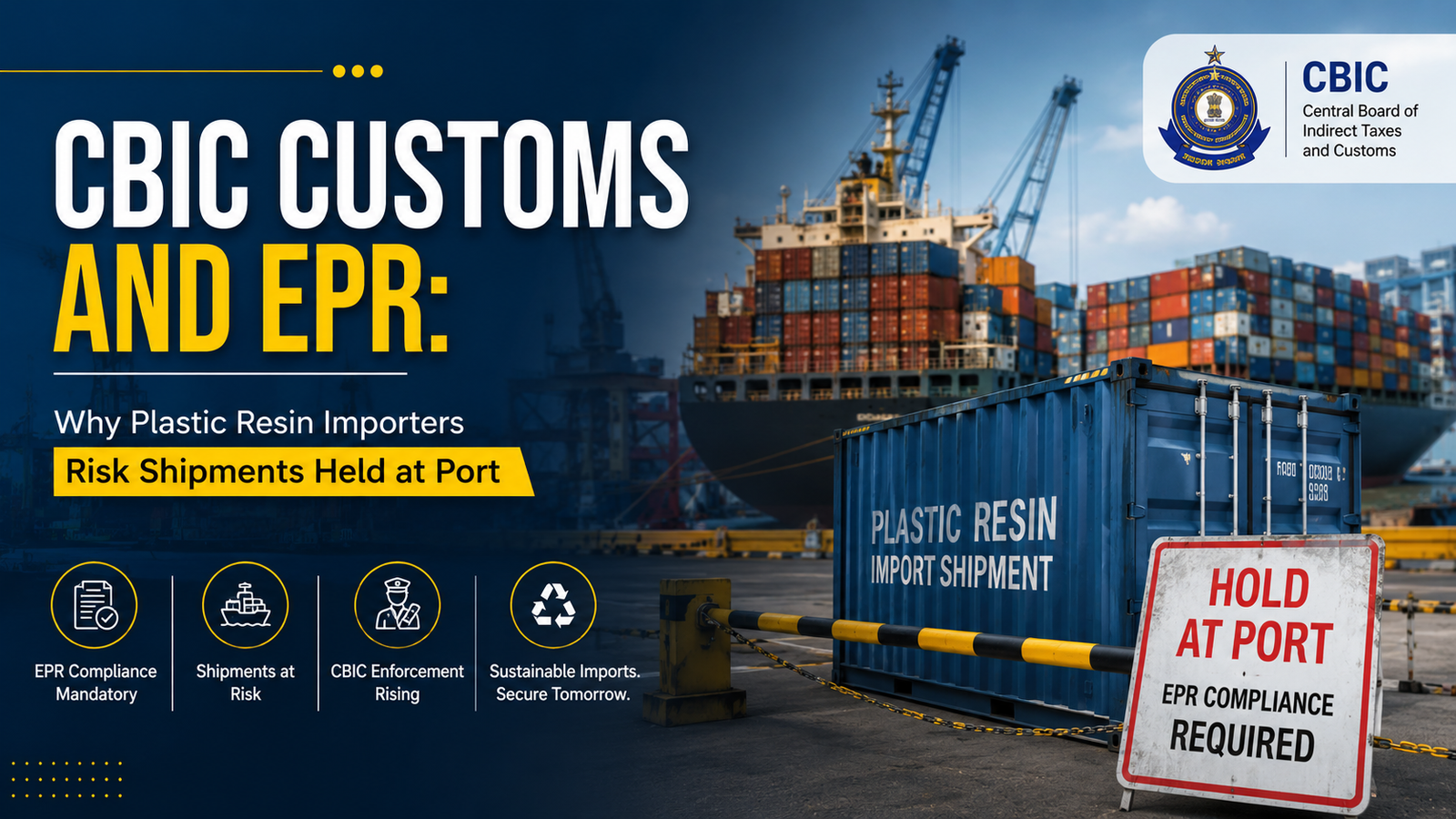
CBIC Customs and EPR: Why Plastic Resin Importers Risk Shipments Held at Port
CBIC customs checks and EPR compliance can delay plastic resin imports. Proper registration and documentation help avoid shipment holds, penalties, and costly port disruptions.
If you import plastic resin, pellets, films or preforms into India, your EPR registration is now a customs document. Since CBIC Instruction No. 21/2025-Customs took effect, a consignment of plastic raw material can be held at port simply because the importer is not registered on the Centralised EPR Portal for Plastic Packaging. What was once a pollution-control formality has become a hard gate on clearance — and the cost of missing it is measured in demurrage, held stock and environmental compensation.
What Changed: EPR Is Now a Customs Checkpoint
On 2 July 2025, the Central Board of Indirect Taxes and Customs issued Instruction No. 21/2025-Customs, directing field formations to verify EPR registration before clearing plastic consignments. The instruction operationalises a Central Pollution Control Board communication dated 3 June 2025 and ties two regimes together for the first time: the Plastic Waste Management Rules under the environment ministry, and customs clearance under CBIC.
The practical effect is straightforward. When your goods reach a port or ICD, the assessing officer is now expected to check for proof of registration on the EPR portal. No valid registration, no clearance. For importers used to treating EPR as a back-office annual obligation, this moves compliance to the very front of the supply chain.
Who Counts as an "Importer" Now
The reason so many businesses are caught off guard is the expanded definition of "importer". The Plastic Waste Management (Amendment) Rules, 2024, notified on 14 March 2024, widened the term well beyond finished packaging.
The expanded scope
An importer now means a person who imports, for commercial use, any plastic packaging, any commodity with plastic packaging, carry bags, plastic sheets or like material — and, critically, plastic raw material in the form of resin or pellets, or intermediate material to be used for manufacturing plastic packaging, such as films or preforms. Category IV rigid packaging preforms, imported as an intermediate input, fall squarely within this net.
In plain terms: if you bring in virgin or recycled resin, granules, masterbatch-bound polymer, film stock or PET preforms, you are an obligated importer under Section 6 of the EPR Guidelines and must be registered on eprplastics.cpcb.gov.in — even if you never sell a finished packaged product yourself.
Why Shipments Get Held at Port
A hold is not a penalty in itself; it is the mechanism. Because customs officers have been directed to sensitise their teams to check EPR proof, a consignment without registrationevidence is simply not released. The container sits, demurrage and detention charges accrue, and your working capital is locked in stock you cannot move.
Three situations most commonly trigger a hold. First, the importer has never registered because it viewed itself as a manufacturer, not a packaging producer. Second, registration lapsed or the annual return was not filed, leaving the portal status invalid. Third, the entity registered under the wrong category and the resin import does not map to its declared plastic category. Each is avoidable with a portal check before the vessel sails.
The Cost of Non-Compliance
The financial exposure runs on two tracks. The immediate track is commercial: port demurrage, container detention and disrupted production schedules while goods are stuck. The regulatory track is heavier.
Penalties under the plastic waste framework range from about ₹10,000 to ₹15 lakh per violation, and CPCB is actively levying Environmental Compensation for shortfalls in EPR target fulfilment, issuing notices and publishing the names of defaulting entities.
Wilful or continuing non-compliance can escalate to prosecution under Section 15 of the Environment (Protection) Act, 1986 — carrying imprisonment of up to five years and fines that can reach ₹1 lakh per day of continuing default. For a regular importer, an unregistered status is therefore not a paperwork gap; it is a recurring liability that compounds with every consignment.
How to Stay Clear of a Hold
A pre-shipment compliance checklist
• Register on the Centralised EPR Portal (eprplastics.cpcb.gov.in) before your next plastic raw-material consignment, under the correct plastic category for resin, film or preforms.
• Verify that your registration status shows as valid and that all annual and half-yearly EPR returns are filed and up to date.
• Keep proof of EPR registration in your customs documentation set, ready for the assessing officer alongside the bill of entry.
• Reconcile your imported plastic quantities with your declared EPR targets so you are not exposed to Environmental Compensation for a shortfall.
• Prepare for the EPR for Packaging Rules, which take effect on 1 April 2026 and extend obligations further across brand owners, importers and e-commerce entities.
Treat EPR registration the way you already treat an IEC or a BIS certificate — a document without which the goods do not move. A single portal verification in the week before shipment prevents the far costlier scenario of a container held at Nhava Sheva or Mundra while charges mount.
What This Means for Your Business
The CBIC–EPR linkage marks a shift from voluntary, after-the-fact compliance to enforcement at the border. If plastic raw material is anywhere in your import mix, your EPR registration is now as operationally critical as your customs broker. Testa & Tegmen advises importers, producers and brand owners on EPR registration, category classification, return filing and Environmental Compensation exposure — so your consignments clear on schedule and your compliance record stays clean. If you areunsure whether your resin or preform imports are covered, a short compliance review now is far cheaper than a container stranded at port.
Related service