Policy · 28 July 2026
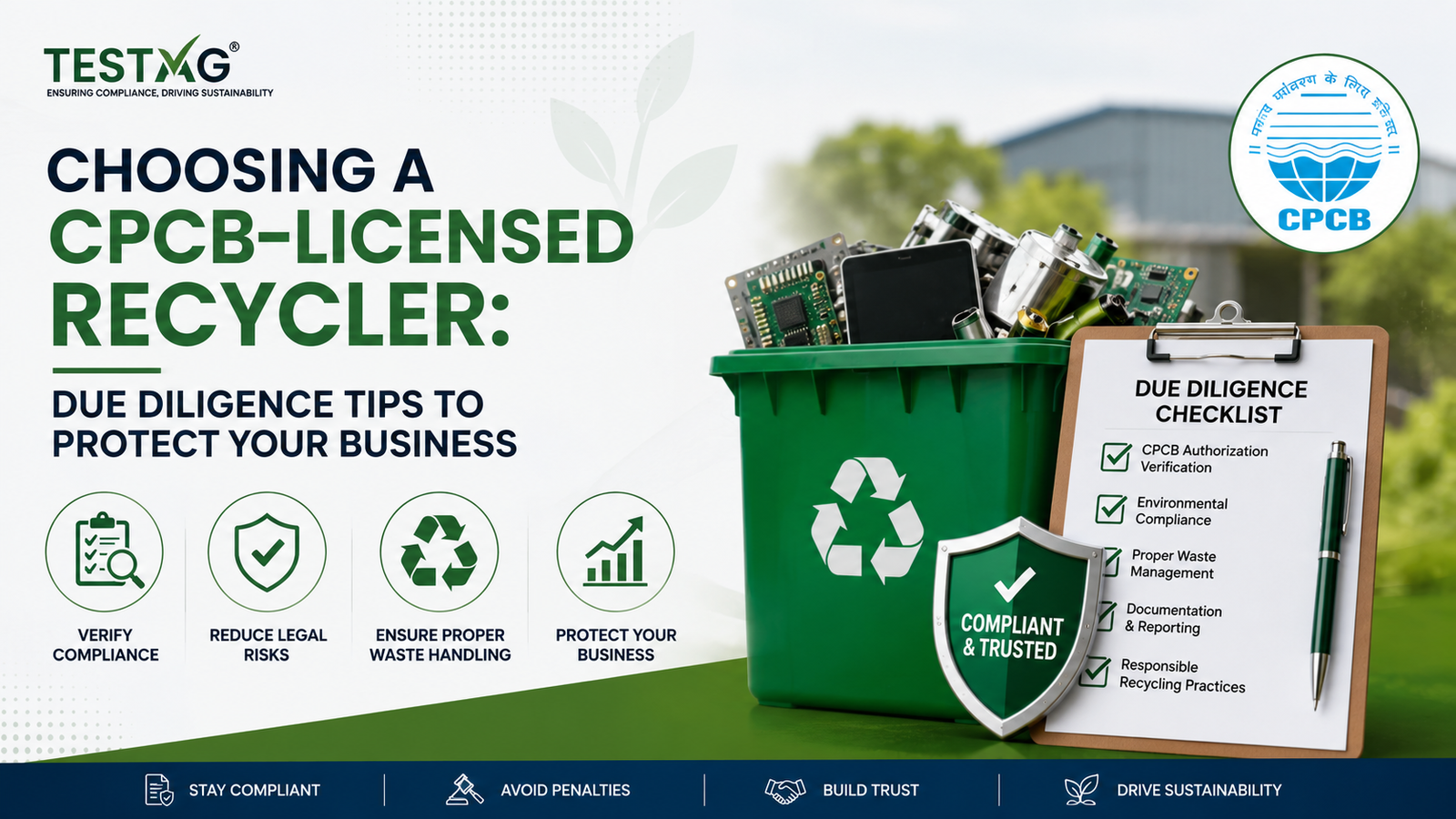
Choosing a CPCB-Licensed Recycler: Due Diligence Tips to Protect Your Business
Choosing a CPCB-licensed recycler? Follow key due diligence steps to verify compliance, avoid legal risks, ensure proper waste handling, and protect your business from penalties.
Choosing a CPCB-licensed recycler is no longer a procurement footnote — it is a compliance decision that can decide whether your Extended Producer Responsibility (EPR) obligations are actually discharged or merely paper-thin. Under the E-Waste (Management) Rules, 2022, a producer only gets credit for e-waste that is verifiably recycled by a genuinely registered recycler. Pick the wrong partner and you can pay twice: once for the certificate, and again in environmental compensation when the certificate is invalidated.
Why the recycler you pick is now a legal risk, not a vendor choice
The E-Waste (Management) Rules, 2022 (in force from 1 April 2023, amended since) shifted the entire compliance model onto a centralised CPCB EPR portal. Producers, manufacturers, refurbishers and recyclers must all register on eprewaste.cpcb.gov.in, and producers can discharge their EPR target only by buying EPR certificates generated by registered recyclers.
That single design choice makes your recycler your compliance exposure. If the recycler is unregistered, over-generating certificates, or registered for the wrong EEE code, the certificates you bought can be cancelled — and the shortfall lands back on you as environmental compensation.
What “CPCB-licensed” actually means
There is no separate “licence” document to wave around. A legitimate recycler holds a valid registration on the E-Waste EPR portal, issued with a unique Registration Number, plus consent to operate from the concerned State Pollution Control Board. The registration is granted for specific EEE codes and a specified recycling capacity, backed by a geo-tagged video of the plant and machinery.
The EEE-code trap most producers miss
CPCB is explicit that a producer can buy an EPR certificate only from a recycler registered for the exact EEE code the producer has been assigned. A recycler registered to process, say, IT and telecom equipment cannot validly generate certificates for large household appliances. Matching codes is the single most common due-diligence miss — verify it before money changes hands.
The “ghost certificate” problem you are paying for
The most damaging fraud in the market is the ghost certificate: credits sold by recyclers who have exceeded their sanctioned processing capacity, so the paper trail exists but no e-waste was actually recycled. CPCB has responded by deploying AI to flag over-generation, introducing real-time weight-slip integration for recyclers anddismantlers, and moving to a model where producers get credit only for verified and audited processing.
The takeaway is uncomfortable but simple: a cheap certificate that sits above a recycler’s real capacity is a liability, not a bargain. When CPCB reconciles capacity against certificates generated, over-issued credits get struck off.
Pricing signals: why “too cheap” is a red flag
CPCB has standardised certificate pricing to stop undercutting. The price of an EPR certificate is set to range between 30% and 100% of the Environmental Compensation (EC) value for that category. A quote that sits far below this band is a signal that either the recycling is not real or the recycler cannot sustain it — both of which put your compliance at risk.
The environmental compensation you are trying to avoid
The EC Guidelines under the E-Waste (Management) Rules, 2022 were approved by MoEF&CC and issued on 9 September 2024, giving CPCB a formal basis to levy compensation. Penalties escalate with repeat default: a first default attracts roughly ₹20,000 for producers and ₹15,000 for recyclers, rising to as much as ₹80,000 for producers and ₹60,000 for recyclers on subsequent defaults.
Remember also the underlying target you are meeting: for both 2024–25 and 2025–26, producers must collect and recycle 20% of e-waste calculated on the relevant prior-year sales. A cancelled certificate re-opens that shortfall.
A practical due-diligence checklist before you buy
Verify registration on the portal. Confirm the recycler’s live registration and Registration Number on eprewaste.cpcb.gov.in — do not rely on a PDF the vendor emails you.
Match the EEE code. The recycler must be registered for the exact EEE code assigned to your EPR obligation.
Check consent and capacity. Ask for the valid State PCB consent to operate and the sanctioned recycling capacity; sanity-check that the certificates offered fit within that capacity.
Look for the geo-tagged plant video. Registration requires an active geo-tagged video of installed machinery; an inactive or stale video is a suspension trigger.
Interrogate the price. Certificates priced far below the 30–100% EC band deserve scrutiny, not celebration.
Keep an audit trail. Retain weight slips, transfer records and portal transaction IDs so your material-flow balance reconciles if scrutinised.
What this means for your business
From 2026, CPCB is linking EPR data with BIS and Customs systems, so weak recycler due diligence increasingly surfaces at import clearance and audit, not just at year-end reconciliation. Choosing a genuinely CPCB-registered recycler, matched to the right EEE code and priced within the EC band, is the cheapest insurance available against cancelled certificates and escalating compensation.
At Testa & Tegmen, our environmental advisory team verifies recycler registrations, reconciles EEE-code matching, and builds a defensible EPR audit trail so your compliance survives scrutiny. If you are about to sign an e-waste recycling contract,talk to us before you commit — a short due-diligence review now is far cheaper than environmental compensation later.
Related service