Policy · 15 June 2026
El Niño and India: A Stress Test for Our Infrastructure
El Niño can disrupt India’s monsoon, agriculture, water and power systems, exposing infrastructure gaps and deepening risks for farmers, workers and low-income communities.
El Niño is generally discussed as a climatic phenomenon developing thousands of kilometres away in the Pacific Ocean. However, its effects can reach Indian farms, reservoirs, electricity grids, markets and households. A strong El Niño may weaken the monsoon, intensify heat and place additional pressure on systems that are already struggling with groundwater depletion, rising power demand and unequal access to basic resources.
The real concern is therefore not only the strength of El Niño. It is also the ability of our infrastructure, institutions and communities to absorb the shock. A climatic event becomes a crisis when weak systems, poor planning and social inequality allow its effects to spread from one sector to another.
What Is El Niño?
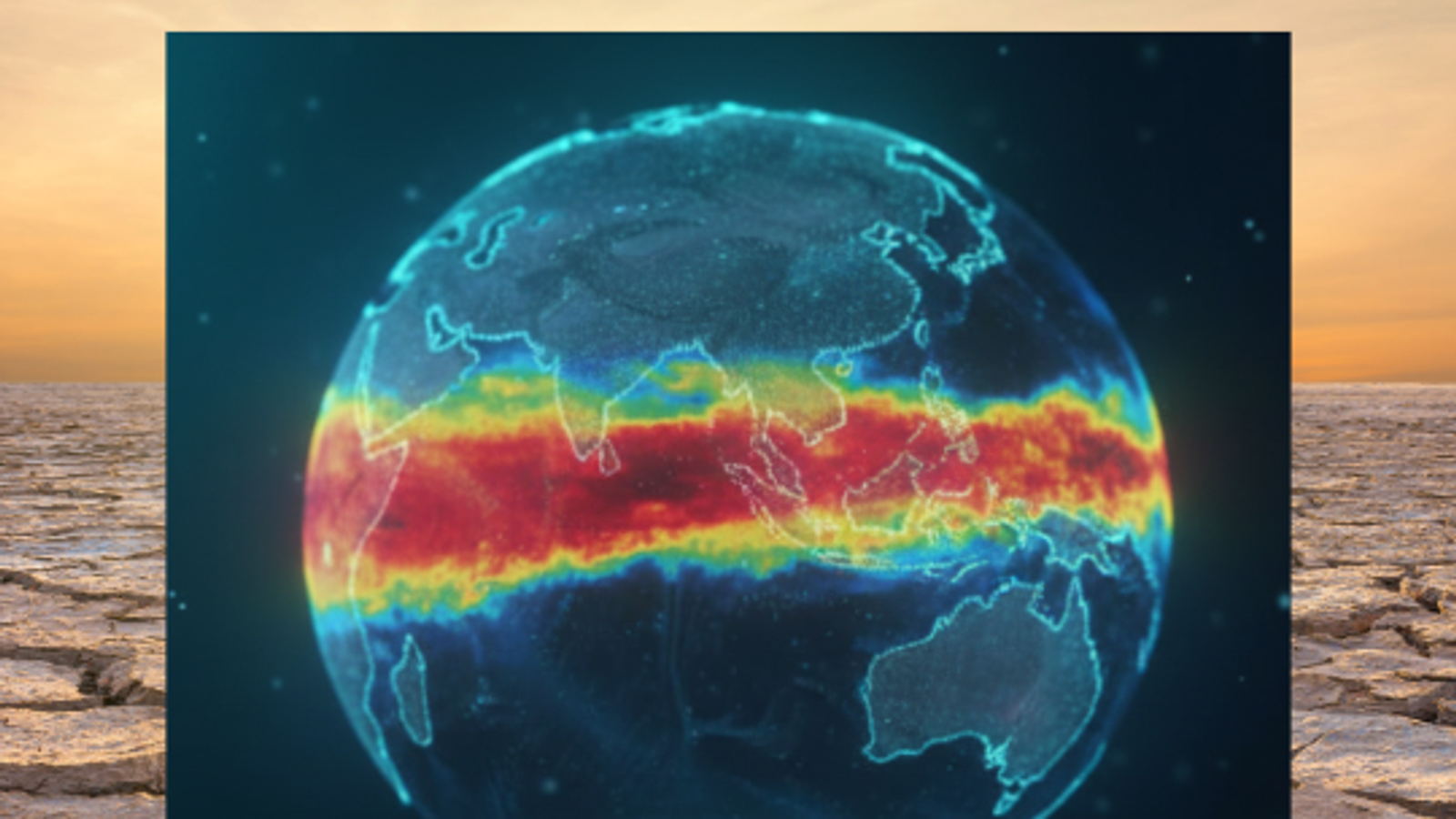
El Niño is a naturally occurring climate pattern associated with unusual warming in the central and eastern equatorial Pacific Ocean. During normal conditions, trade winds push warm surface water towards Indonesia and Australia, while colder water rises near the western coast of the Americas.
During an El Niño event, these winds weaken and the warm water shifts eastwards. This change affects atmospheric circulation and alters rainfall and temperature patterns across different parts of the world. In India, one of the major concerns is its possible impact on the southwest monsoon.
El Niño does not automatically cause drought. The Indian monsoon is influenced by several interacting climatic factors. However, when El Niño combines with stressed water, agricultural and energy systems, its impacts can become far more serious.
From Weak Monsoon to Food Inflation
The first major impact is generally felt in agriculture. A significant share of Indian farming continues to depend on monsoon rainfall. Weak or irregular rainfall can delay sowing, reduce the cultivated area, lower crop yields and increase irrigation expenses.
The kharif crop is particularly vulnerable because it is planted during the monsoon. When harvests decline, less food reaches the market, increasing the prices of grains, vegetables, pulses and other products. Higher input costs may also affect restaurants and food manufacturers.
Food inflation does not affect every household in the same manner. Families that already spend a major share of their income on food may be forced to reduce the quantity or nutritional quality of what they consume. A climatic event can therefore become a public-health and nutrition issue, particularly for children and low-income rural households.
Groundwater, Debt and Farmer Distress
When rainfall fails, farmers often try to protect their crops by extracting more groundwater. This may require deepening an existing borewell or drilling a new one. Since such investments are expensive, farmers may borrow money in the hope that the harvest will allow them to repay the loan.
If the crop fails despite this additional expenditure, the farmer is left with both an agricultural loss and a financial liability. Repeated droughts can create a cycle in which rainfall becomes unreliable, groundwater extraction increases, the water table falls, irrigation becomes more expensive and rural debt continues to grow.
Farmer distress cannot be attributed to El Niño alone. High input costs, limited insurance, price fluctuations, restricted credit and inadequate mental-health support also contribute. El Niño may increase pressure within this vulnerable system.
Extreme Heat and Unequal Access to Cooling
El Niño conditions may also contribute to higher temperatures and more frequent heatwaves. While high daytime temperatures receive most of the attention, warm nights can be equally dangerous because the human body does not receive an adequate recovery period.
The impact is not experienced equally. People working in air-conditioned homes and offices have some protection. Construction workers, delivery riders, street vendors, rickshaw drivers, sanitation workers and agricultural labourers often have no option but to remain outdoors.
Air conditioning itself presents a difficult contradiction. It protects those who can afford it, but it also increases electricity demand and releases waste heat outdoors. Cooling can therefore reduce risk inside one building while adding pressure to the power system and the surrounding urban environment.
Water and Power Are Closely Connected
Hotter weather increases the demand for electricity, particularly for cooling. At the same time, weak rainfall can reduce water availability in rivers and reservoirs, limiting hydropower generation.
Thermal power plants also require water for cooling. During a drought, authorities may therefore face a difficult decision: should limited water be released for agriculture, drinking supplies or electricity generation?
This demonstrates why climate risks cannot be managed in isolation. A rainfall shortage can become a water crisis, an agricultural loss, a food-price increase and an electricity problem. The failure of one system can place pressure on several others.
The Unequal Burden of Climate Stress
The heaviest impacts are generally carried by those with the least protection. Outdoor workers may lose income when temperatures become too dangerous for physical labour. Rural households may be forced to depend on distant or unsafe water sources. Women may face reduced paid agricultural work while spending more unpaid hours collecting water and managing household needs.
A drought is therefore not only about how much water remains. It is also about who receives that water, who can afford alternatives and who is expected to bear the additional work.
Can the Indian Ocean Dipole Help?
The Indian Ocean Dipole, or IOD, can also influence India’s rainfall. A positive IOD may partly offset El Niño, while a negative IOD may weaken rainfall further.
However, the IOD should not be treated as a guaranteed backup system. Its interaction with El Niño is complex, and seasonal forecasts may change as oceanic and atmospheric conditions develop.
Turning the Warning into an Opportunity
India cannot prevent El Niño, but it can reduce the damage caused by it. The forecast should be used as an opportunity to strengthen systems before a climatic shock becomes a humanitarian and economic crisis.
1. Integrate Early-Warning Systems
Weather forecasts, satellite observations, groundwater maps, reservoir levels, soil-moisture data and crop conditions should be brought together into a real-time district-level warning system. The objective must be to identify a crisis before wells run dry or crops fail.
2. Protect Water Resources
Long-term resilience requires restoring water bodies, protecting wetlands, expanding rainwater harvesting, improving irrigation, monitoring groundwater and reusing treated wastewater.
3. Strengthen Agricultural Support
Farmers need timely advisories, affordable institutional credit, wider crop-insurance coverage, faster settlement of valid claims and support for crops suited to local water availability.
4. Improve Energy Resilience
Grid-scale batteries, stronger transmission systems, energy-efficient cooling and better management of peak demand can reduce the pressure created by extreme heat and lower hydropower availability.
5. Treat Urban Greenery as Infrastructure
Trees, urban forests, shaded walkways and open green areas should not be viewed only as beautification. They are essential forms of heat-resilience infrastructure, particularly for people who work and travel outdoors.
Key Takeaways
- El Niño can weaken or disrupt India’s monsoon and increase heat-related risks.
- Poor rainfall can affect agriculture, food prices, groundwater, debt and electricity supply.
- The impact is disproportionately carried by outdoor workers, farmers, women and low-income households.
- The severity of the crisis depends as much on infrastructure and planning as on the climatic event itself.
- Early warnings, water conservation, agricultural protection, energy storage and urban greenery can reduce future losses.
Conclusion
El Niño may begin in the Pacific Ocean, but its effects can reach almost every part of life in India. The important question is not only whether the next event will be weak or strong, but whether our systems are prepared to withstand it.
El Niño is a recurring natural phenomenon. Infrastructure failure, poor planning and unequal protection are not inevitable. By strengthening water security, agricultural support, electricity systems and heat-action planning, India can use the warning to build resilience before future climate shocks become even harder to manage.
Frequently Asked Questions
How does El Niño affect India?
El Niño can influence the Indian monsoon, increase heat and place additional pressure on agriculture, water supplies and electricity systems. Its final impact depends on several other climatic and regional factors.
Does El Niño always cause drought in India?
No. El Niño increases the risk of weaker rainfall, but it does not cause drought every time. The Indian Ocean Dipole and other atmospheric conditions also influence the monsoon.
Why can El Niño increase food prices?
Weak rainfall can reduce crop yields and agricultural output. When food supply declines, prices may increase across fresh produce, grains and processed foods.
How can India prepare for El Niño?
India can improve preparedness through integrated early-warning systems, groundwater protection, crop insurance, drought-resilient agriculture, energy storage, heat-action plans and protection of urban trees and water bodies.
Editorial note: Statistical figures, historical numbers and year-specific forecasts from the original source should be independently verified before publication.
Related service