Research · 22 July 2026
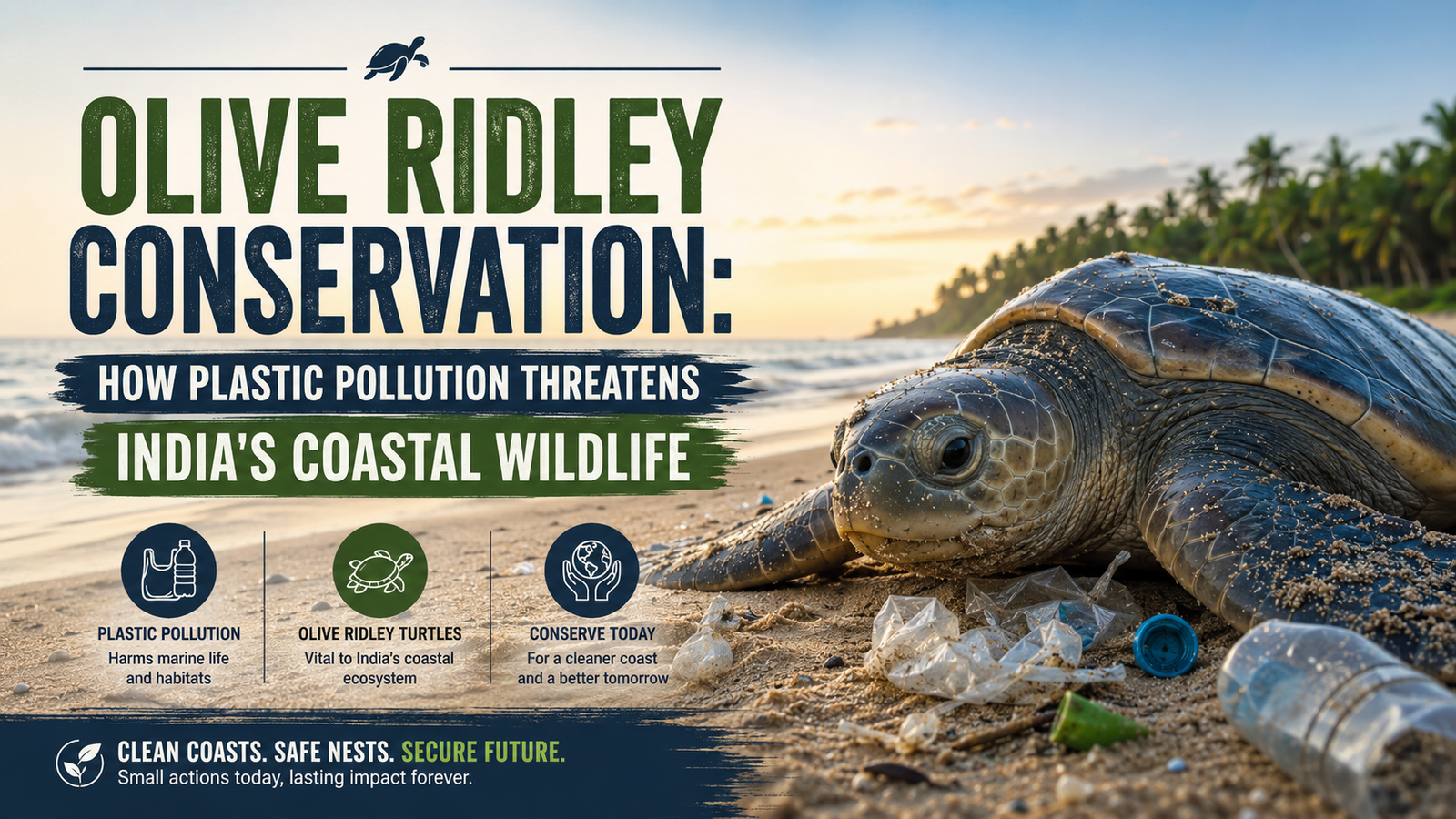
Olive Ridley Conservation: How Plastic Pollution Threatens India's Coastal Wildlife
Plastic pollution, ghost nets and habitat loss threaten Olive Ridley turtles. Declining nesting numbers highlight the urgent need to protect India’s coastal ecosystems.
Olive Ridley conservation in India has reached an uncomfortable turning point. In the 2026 season, Gahirmatha in Kendrapara district — the world's largest known Olive Ridley rookery — recorded no mass nesting at all, its first skip in more than a decade, while the arribada at Rushikulya fell to roughly 2.05 lakh turtles against nearly 6.4 to 7 lakh a year earlier. The turtles are telling us something about the state of our coastline, and increasingly that story is written in plastic.
For businesses, this is not only a wildlife story. It sits directly on top of India's tightening plastic waste and Extended Producer Responsibility (EPR) framework, and it is shaping how regulators think about coastal enforcement.
The 2026 Nesting Season: What the Numbers Actually Show
Arribada — synchronised mass nesting — happens at only two sites on mainland India, both on the Odisha coast: Gahirmatha and Rushikulya. In February 2025, close to 6,98,718 female Olive Ridleys came ashore at Rushikulya over nine days, the largest count there in at least two decades.
2026 broke that pattern. At Gahirmatha, turtles congregated offshore in February, forest department trackers confirmed their presence, and then the aggregation simply dispersed without nesting. Rushikulya saw around 2,05,293 nesting turtles — a sharp fall.A single skipped season is not, by itself, proof of population collapse. Olive Ridley numbers fluctuate naturally with currents, beach geomorphology and cyclone-driven erosion. But when a skip coincides with documented habitat degradation, it deserves attention rather than reassurance.
What the Rushikulya Litter Study Found
A 2026 study by the National Institute of Oceanography (NIO), Goa, surveyed four Rushikulya nesting beaches — New Podampetta, Purunabandha, Siddhantnagar and Prayagi — during the peak 2025 nesting season. It recorded more than 1,100 litter items, of which over 85% were plastic.
Standardised indices tell the story bluntly. The Plastic Abundance Index (PAI) and Clean Coast Index (CCI) classified all four beaches as 'dirty' to 'extremely dirty', placing Rushikulya among the more heavily littered turtle nesting beaches recorded globally.
Some of the litter was not even Indian. Items carried labels from Myanmar, Malaysia, Vietnam and Singapore, arriving via circulating oceanic currents — transboundary pollution that no district administration can regulate away.
Ghost Gear: The Most Lethal Fraction
Abandoned, lost or otherwise discarded fishing gear (ALDFG), commonly called ghost gear, made up 41% of all recorded litter across the four sites. Discarded fishing nets alone accounted for around 32% of litter at New Podampetta; thermocol contributed just over 31% at Siddhantnagar.
The study recorded 237 dead and 121 entangled Olive Ridley hatchlings, most caught in nylon nets and ropes. Partially buried in sand, these form near-invisible barriers directly across the hatchlings' seaward path. Globally ALDFG is only about 10% of marine litter by volume, but it causes a disproportionate share of wildlife mortality because it entangles rather than merely accumulates.
How Plastic Kills a Turtle: Beach, Surf and Stomach
Hatchlings navigate to the sea using beach slope, sand texture and moonlight. Litter, netting and artificial lighting — particularly LEDs — disrupt those cues. Even partial entanglement lengthens the crawl, raising the risk of dehydration, heat stress and predation by gulls and feral dogs.
Adults face a different problem. Olive Ridleys mistake clear plastic bags for jellyfish, and backward-facing papillae in their oesophagus make regurgitation nearly impossible. Ingested plastic causes blockages, lacerations and a false sense of fullness that ends in starvation.
Microplastics and heavy metals have been detected in egg yolks and shells, meaning hatchlings carry a pollution load before they even emerge. The species is listed as Vulnerable on the IUCN Red List.
The Regulatory Map: Which Law Actually Applies
Olive Ridleys are protected under Schedule I of the Wild Life (Protection) Act, 1972, which carries the Act's strictest penalties. Gahirmatha is a designated marine sanctuary. The Odisha government mandates Turtle Excluder Devices (TEDs) on trawlers, and the Indian Coast Guard runs Operation Olivia annually from November to May using Dornier aircraft, drones, interceptor craft and fast patrol vessels — credited with an estimated 80% reduction in bycatch mortality.A single skipped season is not, by itself, proof of population collapse. Olive Ridley numbers fluctuate naturally with currents, beach geomorphology and cyclone-driven erosion. But when a skip coincides with documented habitat degradation, it deserves attention rather than reassurance.
What the Rushikulya Litter Study Found
A 2026 study by the National Institute of Oceanography (NIO), Goa, surveyed four Rushikulya nesting beaches — New Podampetta, Purunabandha, Siddhantnagar and Prayagi — during the peak 2025 nesting season. It recorded more than 1,100 litter items, of which over 85% were plastic.
Standardised indices tell the story bluntly. The Plastic Abundance Index (PAI) and Clean Coast Index (CCI) classified all four beaches as 'dirty' to 'extremely dirty', placing Rushikulya among the more heavily littered turtle nesting beaches recorded globally.
Some of the litter was not even Indian. Items carried labels from Myanmar, Malaysia, Vietnam and Singapore, arriving via circulating oceanic currents — transboundary pollution that no district administration can regulate away.
Ghost Gear: The Most Lethal Fraction
Abandoned, lost or otherwise discarded fishing gear (ALDFG), commonly called ghost gear, made up 41% of all recorded litter across the four sites. Discarded fishing nets alone accounted for around 32% of litter at New Podampetta; thermocol contributed just over 31% at Siddhantnagar.
The study recorded 237 dead and 121 entangled Olive Ridley hatchlings, most caught in nylon nets and ropes. Partially buried in sand, these form near-invisible barriers directly across the hatchlings' seaward path. Globally ALDFG is only about 10% of marine litter by volume, but it causes a disproportionate share of wildlife mortality because it entangles rather than merely accumulates.
How Plastic Kills a Turtle: Beach, Surf and Stomach
Hatchlings navigate to the sea using beach slope, sand texture and moonlight. Litter, netting and artificial lighting — particularly LEDs — disrupt those cues. Even partial entanglement lengthens the crawl, raising the risk of dehydration, heat stress and predation by gulls and feral dogs.
Adults face a different problem. Olive Ridleys mistake clear plastic bags for jellyfish, and backward-facing papillae in their oesophagus make regurgitation nearly impossible. Ingested plastic causes blockages, lacerations and a false sense of fullness that ends in starvation.
Microplastics and heavy metals have been detected in egg yolks and shells, meaning hatchlings carry a pollution load before they even emerge. The species is listed as Vulnerable on the IUCN Red List.
The Regulatory Map: Which Law Actually Applies
Olive Ridleys are protected under Schedule I of the Wild Life (Protection) Act, 1972, which carries the Act's strictest penalties. Gahirmatha is a designated marine sanctuary. The Odisha government mandates Turtle Excluder Devices (TEDs) on trawlers, and the Indian Coast Guard runs Operation Olivia annually from November to May using Dornier aircraft, drones, interceptor craft and fast patrol vessels — credited with an estimated 80% reduction in bycatch mortality.Penalties under Section 15 of the Environment (Protection) Act, 1986, as amended by the Jan Vishwas Act, 2023, now run to substantial monetary sums for non-compliance. More immediately, environmental compensation levied by CPCB against defaulting PIBOs is being enforced with increasing consistency.
What This Means for Your Business
An empty nesting beach at Gahirmatha is not a marketing problem you can fix with a beach clean-up photograph. It is a signal that coastal pollution has moved into the enforcement priority list, and that plastic traceability now connects a brand to a specific item of litter in a specific place.
Testa & Tegmen advises Indian businesses on EPR registration and returns, Plastic Waste Management compliance under the 2026 amendment, Environmental Clearance conditions, and coastal and biodiversity-linked regulatory risk. If you are unsure whether your packaging, your site conditions or your supply chain expose you here, a structured compliance review is considerably cheaper than a show-cause notice. Get in touch for a review of your obligations.
Related service